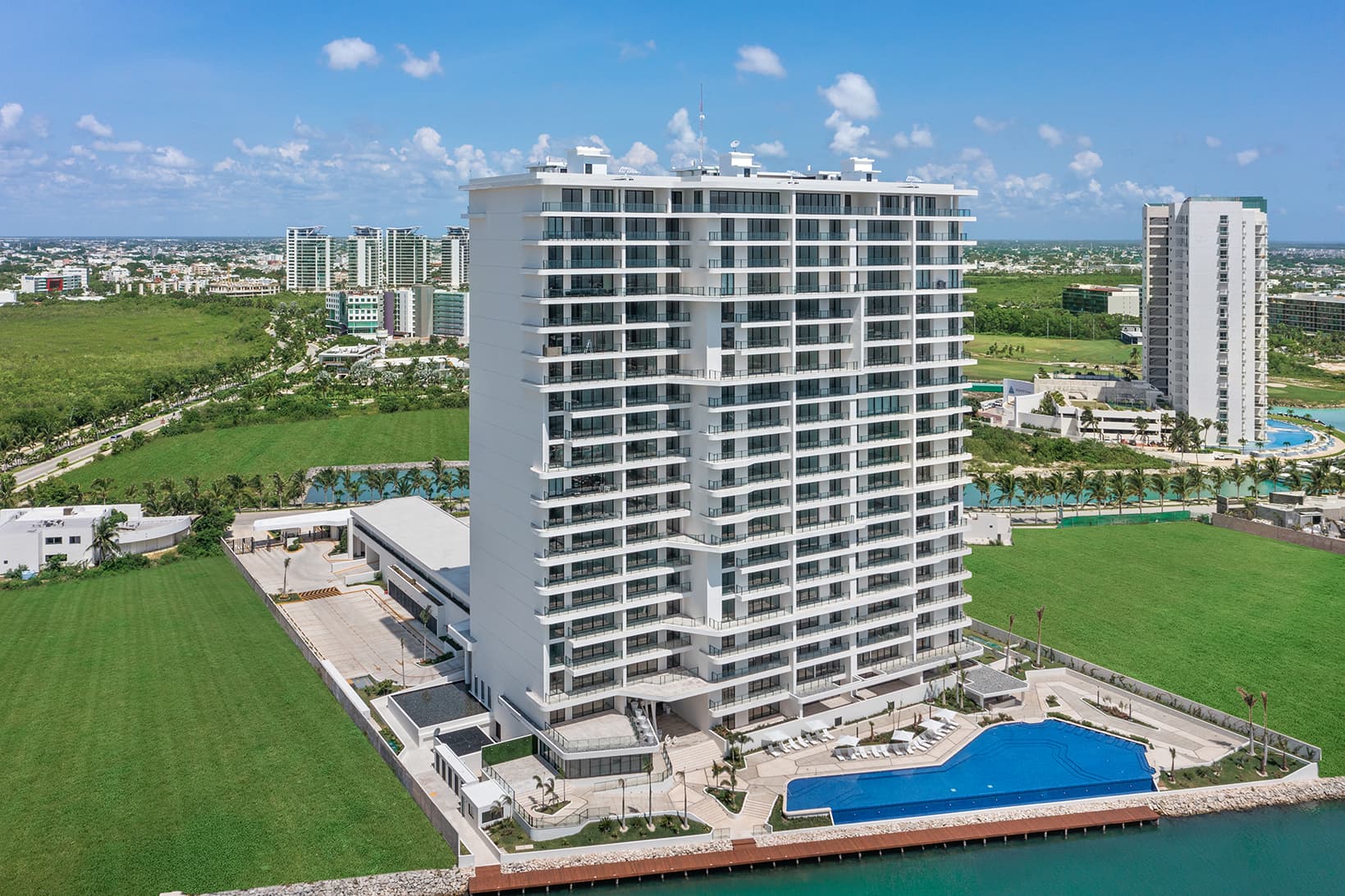

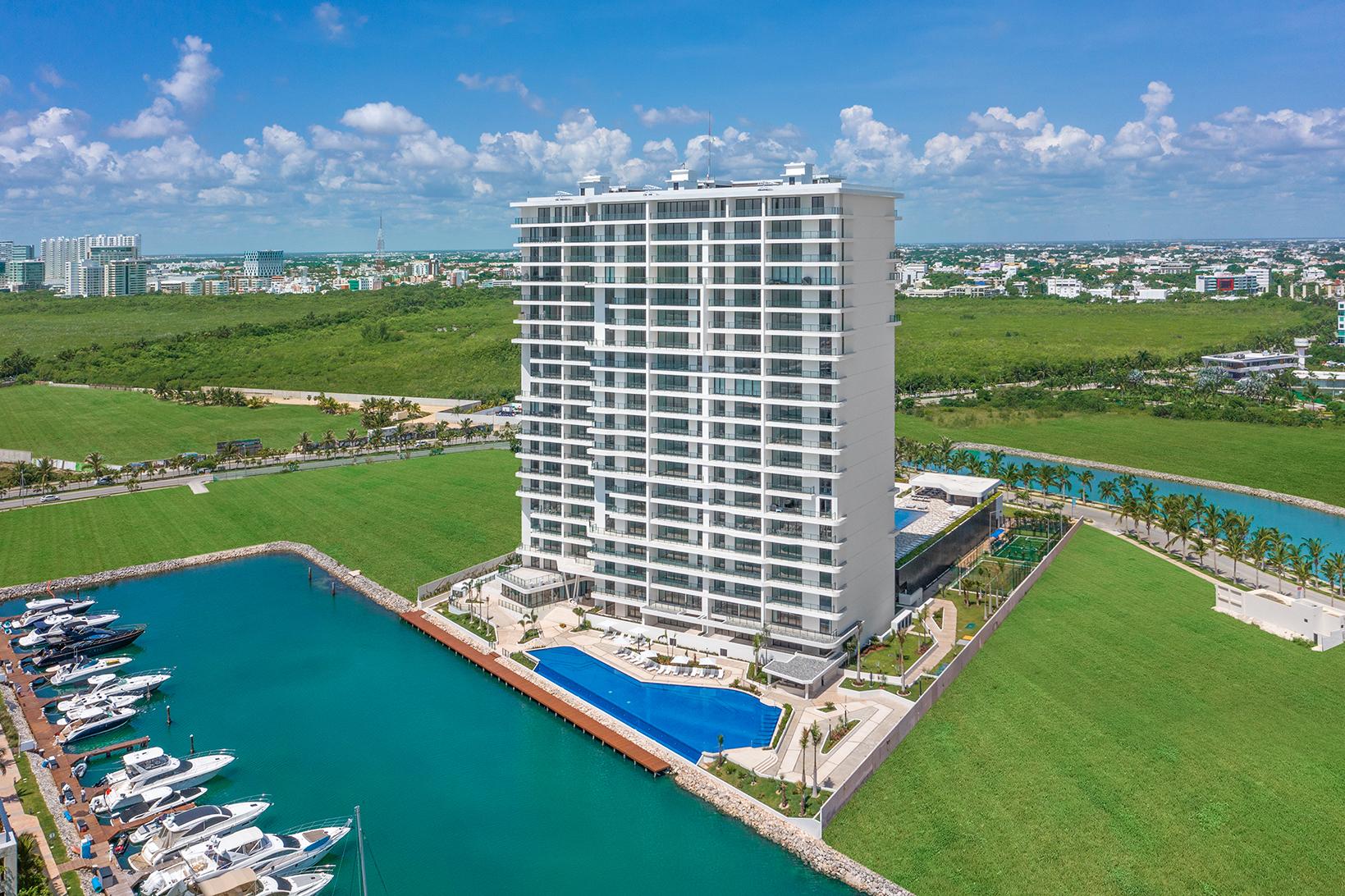
Yes, you can buy a condo in Cancún without flying down for closing. Everything before the deed — choosing the unit, reviewing the contract, wiring payments — can be done from home. The deed must be signed before a Mexican notary, and if you cannot attend, someone you trust signs it for you with a notarized power of attorney (a poder). The simplest way to grant one from the US or Canada is at a Mexican consulate, where it is executed in Spanish under Mexican law and, according to the consulate itself, needs no translation, legalization or authentication.
Below: what can and cannot be done remotely, the two ways to grant the power, what it should say, and the mistakes that delay closings. Every legal point links to the consulate page or statute it comes from.
What you can do from home, and what needs a signature
| Step | Remote? |
|---|---|
| Choosing the unit | Yes — video tours, floor plans and live price lists |
| Reserving and paying the deposit | Yes — by bank transfer to the developer’s company account |
| Reviewing and signing the purchase agreement | Usually — ask the developer how they handle signatures at a distance, and have your own attorney review it first |
| Bank trust (fideicomiso) paperwork | Mostly — the bank and the notary tell you what they need from you |
| Signing the deed before the notary | In person, or by a representative with your power of attorney |
| Receiving the keys and inspecting the unit | In person, or by your representative |
If the restricted zone and the bank trust are new to you, start with can foreigners buy property in Mexico? — this article picks up where that one says “or through a power of attorney.”
Why it has to be a notarized power
A simple signed letter will not do. Mexico's Federal Civil Code (article 2555) requires a power of attorney to be granted in a public deed — or in a letter whose signatures are ratified before a notary or authority — when it is general, when the deal exceeds a set value, or when the agent will sign something that must itself be a public instrument. A property deed is exactly that. In practice, for a condo purchase you need a notarial power, and the notary handling your closing has the final word on whether yours is acceptable.
General or special: how much power to give
Article 2554 of the same code says that a general power for acts of ownership (actos de dominio) gives the agent all the powers of an owner over your property. That is far more than a closing needs. The alternative is a special power, limited to one or more specific acts. The Consulate of Mexico in Vancouver describes the special power as the one that gives the grantor the greatest security, because the agent cannot act outside what is listed, and the Consulate General in Raleigh recommends limiting any power to a specific purpose and timeframe.
Special power (recommended for one purchase)
Names the specific unit and development and the acts your agent may sign: the deed, the bank-trust documents, tax and registry forms, receipt of the unit. It ends when those acts are done.
General power for acts of ownership
Lets the agent buy, sell, mortgage or donate on your behalf until revoked. Useful for people who manage property in Mexico long-term — and risky for anyone else.
General power for administration
Covers managing assets — paying bills, dealing with the condo association — but not buying or selling. Some owners grant one later, for after closing.
Route 1: at a Mexican consulate
This is the route consulates are set up for, and it avoids the translation and apostille steps entirely. The Vancouver consulate states that a power granted there does not need to be translated, legalized or authenticated, because it is executed before a Mexican authority, under Mexican law and in Spanish. The Raleigh consulate's 2026 requirements give a concrete picture of what to expect:
- Appointment: Booked through citas.sre.gob.mx or the Mi Consulado phone line — one appointment per power of attorney.
- Identification: Non-Mexican citizens present a passport, driver’s license or ID card showing their full legal name.
- Interpreter: If you do not speak and read Spanish, you bring an interpreter of your choosing, with valid official ID.
- Fee: US$177 per power of attorney at Raleigh in 2026. Other consulates set their own; Canadian ones charge in Canadian dollars.
- Spouse: If you are married, your spouse may be required to sign as well for a power that covers buying or selling property.
- The text: Before the appointment, get from your representative or lawyer in Mexico all the information the power must contain and which type you need.
Requirements differ slightly between consulates, so read the page of the one nearest you. The last point is the one that matters most: ask the notary who will handle your closing in Cancún for the exact wording before you book, so the consulate drafts the power that notary expects.
Route 2: a local notary plus an apostille
The other option is signing before a notary where you live and certifying the document with an apostille. According to the Hague Conference status table, the Apostille Convention has been in force for the United States since October 15, 1981, for Mexico since August 14, 1995, and for Canada since January 11, 2024 — so Canadian documents no longer need the older consular-legalization chain.
In practice, this route carries more uncertainty than the consulate. The document is usually in English and will need a Spanish translation, and a US-style form may not contain the specific powers a Mexican notary needs to see. Before you choose it, ask the closing notary in writing whether they will accept a foreign-notarized, apostilled power, what translation they require, and whether it must be formalized again before them.
Who to appoint
Your agent will sign the most important document of the purchase on your behalf, so choose someone whose interests are yours: a family member who will be in Mexico, or your own attorney. Avoid appointing someone who works for the other side of the transaction. Whoever it is, the Raleigh form asks for the agent's full name and relationship to you, so have those details ready.
Checklist for a remote closing
- Confirm the closing notary early and ask what the power of attorney must say and in what form they will accept it.
- Choose special over general unless you have a reason not to, and name the unit and development.
- Book the consulate as soon as you have the wording — one appointment per power, and per person if both spouses sign.
- Send the original to Mexico by a trackable courier, and keep scans.
- Plan the money: the balance and closing costs are wired, not carried. See closing costs in Mexico and the cash limit for property.
- Name your trust beneficiaries in the fideicomiso — it is easy to overlook when you are not in the room. See fideicomiso beneficiaries.
- Revoke or let it expire: once the deed is registered, a special power has done its job.
What you can buy without being there
Remote buying works best for move-in-ready units you can see on video and for pre-construction projects where the closing is still months away and you have time to prepare the power. The lowest current list price per market in our portfolio, generated from live inventory:
| Market | Condos from | Development |
|---|---|---|
| Cancún | $2,660,000 MXN | Valmira |
| Puerto Cancún | $15,289,000 MXN | Vellmari |
| Playa del Carmen | $2,244,000 MXN | La Selva |
| Tulum | $3,600,000 MXN | Xaviera |
List prices in Mexican pesos, subject to change and availability. The table updates automatically.
Browse condos for sale in Cancún or, for the marina tier, condos for sale in Puerto Cancún. Tresor Real Estate has delivered more than 2,000 homes and condos, and our advisors can arrange video tours and walk you through the paperwork for a remote closing.
This article is general information, not legal, tax or investment advice. Consular requirements and fees change; confirm them with the consulate you will use and with the notary handling your closing.
Frequently asked questions
Can I buy property in Mexico without traveling there?
Yes. Everything up to closing — choosing the unit, reviewing the contract, wiring payments — can be handled from home. The deed itself is signed before a Mexican notary, and if you cannot be there, a representative signs it for you under a power of attorney. Many buyers still visit once before committing, but it is not a legal requirement.
Can a foreigner grant a power of attorney at a Mexican consulate?
Yes. Mexican consulates in the US and Canada notarize powers of attorney for use in Mexico, and the Consulate General in Raleigh’s 2026 requirements state that non-Mexican citizens can identify themselves with a passport, driver’s license or ID card. If you do not speak and read Spanish, you bring an interpreter. You need one appointment per power of attorney.
How much does a power of attorney cost at a Mexican consulate?
Fees are set per consulate and per document. As one reference, the Consulate General of Mexico in Raleigh lists US$177 for each power of attorney in its 2026 requirements; Canadian consulates charge in Canadian dollars. Check the fee page of the consulate you will use, and budget separately for your interpreter if you need one.
Does a power of attorney from a Mexican consulate need an apostille?
According to the Consulate of Mexico in Vancouver, a power of attorney executed at the consulate does not need to be translated, legalized or authenticated, because it is granted before a Mexican authority, under Mexican law and in Spanish. The apostille question only arises if you sign before a local US or Canadian notary instead — and in that case, ask the closing notary in Mexico what they will accept before you sign.
Does my spouse need to sign the power of attorney?
Possibly. The Vancouver consulate says that a married person under a community property regime who grants a power that includes acts of ownership needs the spouse to grant it too, or it will not have legal effect until the spouse authorizes it. The Raleigh consulate warns that a spouse “may be required to sign as well.” Ask the closing notary, and if in doubt, have both spouses sign.
Should I give a general or a special power of attorney?
For a single purchase, most buyers are better served by a special power limited to that property and that closing. A general power for acts of ownership gives your agent every power an owner has over your assets. Mexican consulates themselves recommend limiting the power to a specific purpose and a specific timeframe.